Executive Project, Program & Portfolio Management Summit
Optimize Portfolio Insights, Prioritization, and Decision-Making for Pharma and Biotech
September 30 - October 1, 2025 ALL TIMES EDT
Tuesday, September 30
7:45 amRegistration Open and Morning Coffee
8:45 amOrganizer's Welcome Remarks
MORNING MEET & GREET ICEBREAKER (IN PERSON ONLY)
Michael Ferrante, Executive Director, Business Analytics, Global Regulatory Affairs & Clinical Safety, Merck
Jumpstart your conference experience with a lively morning speed networking! This informal networking session is the perfect chance to meet fellow participants and connect with your conference peers right from the start. Grab a cup of coffee, engage in conversations, and kick off the conference with a bang. Don't miss out on this fantastic opportunity to make new connections, share insights, and lay the groundwork for a memorable conference journey.
LEVERAGING AI IN PPM
Evolving Systems, Automation, and Processes to Prepare for an AI Future
 Sylvia Marecki, PhD, Senior Director, Head, Portfolio Reporting & Analytics, Moderna
In today's rapidly evolving technology landscape, organizations must evolve systems and processes to fully harness the power and potential of AI. This session will explore the transformative journey toward real-time, AI-powered end-to-end planning and forecasting for portfolio and program management through automation, process, and system evolution. Attendees will gain valuable insights into strategies that can streamline operations, enhance data-driven decision-making, and create the foundation required to embrace an AI future.
AI-Powered PPM: The Landscape of Tools & How to Drive Adoption


AI is transforming the way Project, Program, and Portfolio managers operate—enhancing decision-making, optimizing communications, and streamlining workflows. This session will provide a structured overview of AI-powered tools at different maturity levels—from basic automation to advanced decision-support systems. We’ll explore practical use cases, including setting up AI agents, leveraging tools for study data and documentation, and looking at the future of cutting edge platforms designed for drug development. Beyond tools, we’ll discuss strategies for AI adoption, addressing key challenges such as overcoming resistance to change, data governance, and selecting the right AI solutions for your organization.
10:25 amCoffee Break with Exhibit Viewing
TECH-ENABLED DECISION MAKING IN MODERN PORTFOLIO MANAGEMENT
 From Data to Decisions: AI-Supported Portfolio Insights in Real Time
In this presentation, we’ll show how AI combined with Monte Carlo simulation can support better project and portfolio decisions. We’ll demonstrate how SUMbuddy turns complex data into clear, actionable insights in seconds. You’ll see how different “what-if” scenarios can be explored interactively during the session.
 Past, Present and Future: Portfolio Strategy in the Decision Room
 Dimitrios Skaltsas, CEO & Co Founder, Intelligencia AI
In the worlds of drug development and portfolio strategy, some practices remain stuck in the past, while others are rapidly evolving with the advent of data, technology, and AI and changing the future as we speak. In this session, Intelligencia AI’s CEO and co-founder will share practical lessons and industry-driven insights from leading pharma companies. He will explore how AI, when grounded in expertly curated data and validated, transparent models, is reshaping decision-making across the development lifecycle. Real-world examples will highlight where AI delivers clarity, consistency, and confidence—and where human judgment continues to play an essential role.
Tech-Enabled Decisions: Implementing Tools and Processes That Transform Portfolio Strategy
 Kundini Amin, Head, Portfolio Leadership, Analytics & Insights (PLAI), Biogen
In an increasingly complex R&D environment, pharmaceutical and biotech companies are investing in technologies and structured processes to elevate decision-making across clinical trials, projects, programs, and portfolios. But the path from tool design and selection to impact realization is rarely straightforward. This panel will bring together leaders who have implemented digital platforms, AI/ML-enabled analytics, and governance frameworks to support faster, more confident, and data-driven decisions. Panelists will share lessons learned from design through implementation—what worked, what didn’t, and how to drive adoption across the organization. Discussions will also cover measurable outcomes, such as improved scenario planning, program and portfolio execution, resource optimization, and strategic alignment. Attendees will gain practical insights on choosing the right technologies, managing change, and demonstrating value to leadership.
 Ghislaine Bédulho, Global Head of R&D Portfolio Reporting, Benchmarking & Competitive Intelligence, Sanofi


.
 LUNCHEON PRESENTATION: Navigating Complexity: Building Portfolio Agility in Life Sciences
 Erik Raper, Senior Managing Director, North Highland
R&D portfolio leaders face growing pressure to accelerate innovation, manage shifting priorities, and do more with less. This session shares a practical, people-centered approach to portfolio agility. Learn how North Highland’s NH360 framework helps integrate strategy, governance, execution, and leadership behaviors to enable smarter decisions, cross-functional alignment, and sustainable transformation.
1:10 pmSession Break
FRAMEWORKS FOR BETTER DECISIONS: GOVERNANCE, RISK & STRATEGIC ALIGNMENT
Role and Relevance of Benchmarks in Project Forecasting and Valuations
Ghislaine Bédulho, Global Head of R&D Portfolio Reporting, Benchmarking & Competitive Intelligence, Sanofi

This session will explore how benchmarks can enhance forecasting accuracy and valuation strategies. The speaker will share insights from a regulatory-focused use case, highlighting how benchmark data informed decision-making, risk assessment, and resource planning. Attendees will gain practical perspectives on incorporating benchmarking into project evaluation frameworks to drive more informed and confident portfolio decisions.
 The Intelligent Portfolio: How AI-Powered Planning Rapidly Transforms Strategic Intent into Adaptive Execution
Traditional biopharma planning approaches trap organizations in static templates and lengthy strategy-to-execution gaps, where shifting opportunities often conflict with operational agility. This session explores how AI-powered planning intelligence learns from thousands of completed life sciences projects to instantly transform natural language strategic intent into industry-specific, audit-ready execution plans. We'll examine how leading organizations build "intelligent portfolios" that seamlessly pivot between scenarios while maintaining compliance rigor and strategic agility. Attendees will discover practical frameworks for implementing planning systems that rapidly operationalize strategic pivots that previously took months to execute.
3:00 pmRefreshment Break with Exhibit Viewing
Using the Framework of Governance and Risk Management to Improve Project, Program, and Portfolio Decision Making
 Kristin Robbins, Vice President, Program & Portfolio Management, Normunity
Does your organization make project and program decisions in silos? Are the process and responsibilites for decision making unclear? Is risk management an afterthought? By distinguishing governance, focused on accountability and strategic alignment, from risk management, centered on identifying and mitigating uncertainties, leaders can create a structured approach for informed, proactive decisions. Attendees will gain insights and real-world examples empowering them to drive smarter, risk-aware confident decision making.
Corporate Strategy’s Journey to Operational Reality and Back
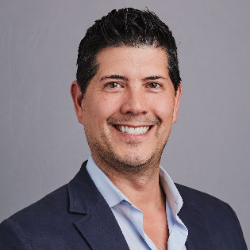 Stephen Smith, Senior Program Director, Corcept Therapeutics
Each year a company’s strategy is reiterated or redefined to keep alignment across the organization. The strategies inform goals and then teams action to complete them. A strategy gets put in pieces then passed through many minds and hands before being put into action. The abstract nature of the strategy and real world constraints of implementing it can be challenging to identify. Since the strategy is developed with relatively few people and the implementation is dispersed across the organization, disconnection between the two can be difficult to identify. This discussion will include how this relationship is kept in sync and methods to keep a tight connection between the two.
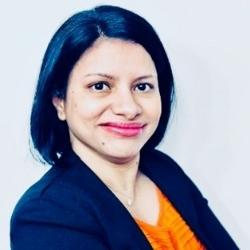 Deepika Sharma Das, Director, Portfolio Strategy & Partnerships, Global Rare Disease Therapeutic Area, Novo Nordisk


INTERACTIVE ROUNDTABLE DISCUSSION (IN PERSON ONLY)
Lifecycle of a Decision—Managing the Continuum of Risk through Key Principles and Structured Decision-Making
The drug development continuum of risk, time, and leadership interaction needs to be managed but does not always fit a standard governance rubric. In addition, the risk management process falls apart without quality inputs and processes. Good organizations manage the risk through informed decisions at any point through traits such as being mindful of their decision quality, interpreting decisions with fluency, including appropriate stakeholders in decisions, and employing the right processes and tools to support the decision making. The main traits to be discussed are:
• Structured decision making
• Organization capability and maturity
• Stakeholder engagement
• Core tools and processes
Breakout groups will each tackle one of these pillars and converge on pros and cons of solutions, and techniques to serve these traits. Each will then share a brief readout of their takeaways, giving everyone a broader view of how different companies are advancing decision discipline in the face of risk and uncertainty.
5:45 pmNetworking Reception with Exhibit Viewing
6:45 pmClose of Day
Wednesday, October 1
8:00 amRegistration and Morning Coffee
INTERACTIVE ROUNDTABLE DISCUSSION (IN PERSON ONLY)
Growth Pathways and Talent Development in PPM
What does career growth look like in PPM today—and how can organizations build intentional talent pipelines that match the evolving demands of innovation, agility, and cross-functional leadership? Join this highly interactive session designed to spark conversation, surface best practices, and drive actionable insights around professional development and team capability-building in project, program, and portfolio management. We’ll kick off with a brief 10-15 minute overview exploring the current state of career pathways and skill development in PPM—covering themes like role evolution, leadership readiness, and the future competencies that matter most. Then, we’ll move into breakout discussions led by experienced facilitators, each table focused on a specific facet of talent development, such as:
• Designing sustainable career ladders in PPM
• Developing high-potential PPM leaders
• Balancing technical, strategic, and leadership skills
• Building cross-functional influence and stakeholder engagement
• Retaining top talent in a hybrid/remote world
Each group will dive deep into their chosen topic for 30 minutes, sharing challenges, ideas, and experiences. We’ll wrap up with a rapid-fire readout from each table, capturing key takeaways and new ideas participants can bring back to their teams. Whether you're a seasoned leader looking to shape your team or a rising PPM professional mapping your next steps, this session offers a collaborative space to learn, reflect, and grow.
TOOLS & MODELS FOR PORTFOLIO PRIORITIZATION
 Leveraging AI-Powered Project Portfolios to Address the Need for Speed:
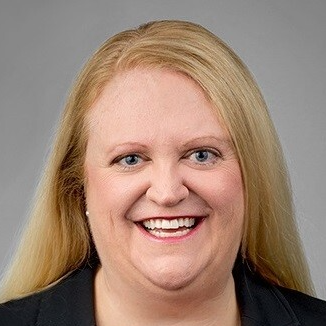
Explore findings from the 2025 Global State of Strategy Execution Benchmark Study, highlighting how organizations are meeting strategic goals and where gaps remain. Examine key trends in governance, alignment, speed, and data access with special focus on the role of AI and portfolio management in driving execution success. Gain insights into what sets Strategy Leaders apart from Laggards and take away practical actions inspired by the data to improve speed and effectiveness across the enterprise.
Building a "5R" Based Asset Investment Decision Tool (Phase 0 to POC): From Stakeholder Engagement, to Tools Design, Communication, Training, and Execution
 Ivan Kugener, Vice President & Head of Global Portfolio Management, Valuation & Analytics, Merck KGaA
We will review how we managed the project, the challenges we faced and how we resolved them. Then, we will look at the resulting process and new tools (going from a "5R" concept to a pragmatic "6R" for scoring and (operational as well as strategic) prioritization). We will finish by navigating the outcomes of the implementation and integration of this new method into our day to day project management and decision making. We will wrap-up the session with the lessons learned and next steps.
Managing an Integrated Portfolio across Research and Development
 Peter Ray, Vice President, Head of Portfolio & Decision Analytics, Novartis
A common challenge facing many development portfolio frameworks is how to maintain a level playing field for projects at different stages. Financial metrics like NPV disproportionately favor later stage projects that are closer to launch, and this is exacerbated when adding the “e” element of risk. This typically leads to either phase-specific comparisons or a greater reliance on multivariate comparisons. What then happens when you try to incorporate the research portfolio into the equation? How to connect decision making about candidate optimization and selection, strategic platform priorities, and qualitative and quantitative throughput targets with clinical development priorities? And how to balance investment across R&D, early and late? This discussion will review some important considerations for managing tradeoffs and getting the balance right.
10:45 amCoffee Break with Exhibit Viewing
The Cost Challenge: Evaluating Approved Program Funds to Fuel New Portfolio Investment Opportunities
 Joel Ott, Executive Director, Portfolio and Project Management, Eli Lilly & Company
Lilly’s Portfolio and Project Management team runs an annual process to evaluate opportunities to reallocate funds from late phase approved programs to fund new investment requests. The intent is to not tangibly impact the value commitment of the approved assets while enabling new investment requests to be funded. This helps internal governance have optionality for funding new investments that they view more favorably than previously approved investments.
Portfolio Prioritization and Role of Target Product Profile and Target Label Profile
 Saeid (Sam) Yazdani, Senior Director, Project, Program & Portfolio Management – Drug Development, argenx
Target Product Profiles (TPPs) and Target Label Profiles (TLPs) are critical tools in biopharmaceutical portfolio management, aligning clinical development with regulatory and commercial objectives. This session explores how structured use of TPPs and TLPs drives informed decision-making, improves cross-functional alignment, and supports early identification of risks and opportunities. By clearly defining desired product outcomes and anticipated label claims, teams can prioritize assets, allocate resources effectively, and ensure development efforts focus on creating differentiated, reimbursable therapies that meet market and patient needs—ultimately maximizing the value and impact of the R&D portfolio.
From Disconnected Data to Strategic Insights: Transforming Portfolio and Program Management for Biopharma Growth
 Jeff DeVito, Head of PMO, Pioneering Medicines, Flagship Pioneering
An overview of how Pioneering Medicines, a Flagship Pioneering company, transformed its program and portfolio management processes from fragmented systems into a structured, insight-driven framework using innovative tools and strategic process improvements. We will share how we redesigned foundational systems, streamlined workflows, and enhanced cross-functional visibility to support portfolio growth and efficient program management. Attendees will gain insights into scalable methodologies for operational excellence, decision-enabling analytics, and R&D program execution.
12:45 pmEnjoy Lunch on Your Own
DATA-DRIVEN INSIGHTS: ENHANCING VISIBILITY, KPIS, AND FORECASTING
Quantitative Decision Making—Navigating Uncertainty and Biases
 Ian MacPherson, Director, Portfolio Planning, Ionis Pharmaceuticals Inc
NPV and eNPV estimates are the cornerstone of financial modeling for many portfolio teams. The simplicity is alluring. All the complexity of a program gets distilled in one number, making it an easy way to compare and prioritize programs. But when and why should NPVs not drive decision making? During this talk, we’ll discuss when certain forecasts and NPVs can lead to unideal investment decisions and how to make program and portfolio forecasting enablers of strong decision making.
Aggregating Trial Operations Data into a Central Data Warehouse for Automated KPI Reporting
 Joe Stalder, Vice President, Program Management, Zentalis Pharmaceuticals
Biopharma companies have embraced the use of KPIs to identify issues with project performance, but often companies focus on indicators that lack context or are not optimized for decision-makers. In this session, we will review a case study where a small biopharma created KPIs for clinical trials, visualized these KPIs using automated and interactive dashboards, and utilized the dashboards with decision-makers to monitor project progress and intervene when necessary. We will review lessons learned for each of these aspects.
Strategic Sourcing of Biopharmaceutical R&D: The Role of Project Uncertainty, Value, and Diversification
 Christopher Larson, Tilburg University
Biopharmaceutical firms face critical strategic choices when sourcing external R&D projects, balancing potential value, risk, and strategic positioning. This research explores how firms match sourcing modes with project characteristics. Findings suggest licensing is preferred for high-value but uncertain projects, asset acquisitions for high-value projects with high probability of success, and M&A for low-value projects. M&A reduces termination likelihood for risky, low value projects and serves as a key entry mechanism into new therapeutic areas. By uncovering systematic patterns in external R&D sourcing, this study advances understanding of risk management, capability acquisition, and strategic decision-making in biopharmaceutical innovation.
3:35 pmNetworking Refreshment Break
INTERACTIVE ROUNDTABLE DISCUSSION (IN PERSON ONLY)
Driving Operational Excellence and Strategic Agility in PPM
As biopharma portfolios become more complex and resource constraints more pressing, organizations must continuously evolve how they govern, prioritize, and measure success. Operational excellence in PPM today means striking the right balance between structure and flexibility—ensuring rigor without sacrificing responsiveness. In this interactive session, participants will explore how their peers are tackling some of the most pressing questions in modern portfolio and project management: Topics include:
- Making Portfolio Governance More Agile: Balancing Structure with Speed
- How Are You Measuring PPM Success? Creative KPIs Beyond Timelines and Budgets
- Project Prioritization Frameworks for Investment Decision Making and Allocating Resources
- Strategies to Manage Risk across the Portfolio
4:55 pmClose of Summit